

Mass Comm Week: A Session On Trust & Credibility

By Brittany Anderson
Web Content Contributor
For mass communication majors, mid-October is an exciting time to be on campus. It’s when Mass Comm Week happens: a week-long event that spans across a collection of different panels with speakers, resources, workshops and more aimed towards giving mass comm students career tips, new skills and opportunities for their future in a communication and media-centric career.
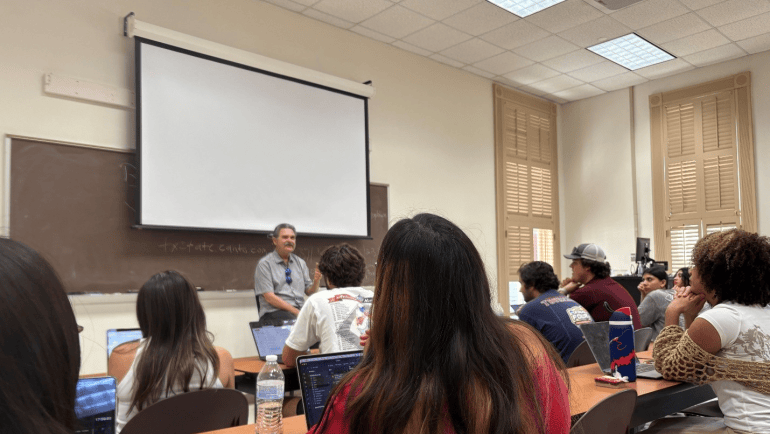
In the midst of “fake news,” deep fakes and media conspiracy theories, Oct. 14’s first journalism session saw Emmy-award winning journalist Lynn Walsh of Trusting News give an empowering talk over strategies journalists can use to create trust and credibility between themselves and their audience.
“Most people don’t necessarily think that journalists are responsible for made-up news and information, but they do say it’s up to us to try and fix it,” Walsh said. “They think journalists are more responsible than the government and technology companies. Whether we want to get involved or not, the public wants us to and expects us to.”

Walsh is passionate about government transparency, holding those in positions of power accountable and fighting for access to public information. It’s why her role in Trusting News is so important in our current social and political climate.

Walsh spoke on assumptions that have been made about those who work in the media, including one that says journalists are trained in “journalism schools” to slant the news.
“If someone is believing this, what are we going to do to make sure that they know that’s not what’s happening?” Walsh said. “That’s what we’re doing at Trusting News. Getting people to talk about their ownership. How they build stories, how they work with sources, how they gather facts, how they fact-check, how they try to get all sides.”
Walsh believes journalists hold a unique and important role by telling stories from all walks of life and impacting others lives through many different mediums— not just the daily grind of politics, crime or breaking news.
“As journalists, we see ourselves as filling a need for society,” Walsh said. “The public doesn’t always see it that way. What are we going to do to change that perception? Good intentions don’t automatically equal trust anymore. People are consuming information differently. They’re reading and listening to things in multiple different spaces. Just having good intentions isn’t enough. If they don’t trust us, then how will they turn to us? Where are they going to go?”
A poll from the Pew Research Center found that only 21% of American adults have spoken with or been interviewed by a local journalist. Walsh explained one way to change the negative perceptions are for journalists to go out into their communities and seek out plenty of diverse sources so they can tell better, more accurate and more broad stories.
“By looking at the data, the less white you are, the younger you are, the less educated you are and the less money you make, you are the least likely to have talked to a journalist,” Walsh said. “We need to be better at talking to more of our audience, and not just the same portion of it.”
Walsh’s purpose bears repeating: both journalists and news consumers need to do their part in creating, sharing and encouraging content that educates, inspires and improves our world.
Featured image by Brittany Anderson.
-

1
In My Head
-
play_arrow
In My Head Phantogram & Whethan
-
-

2
Last Escape
-

3
Reason to Pray
-

4
Rabbit season
-

5
Still Do



Post comments (0)