

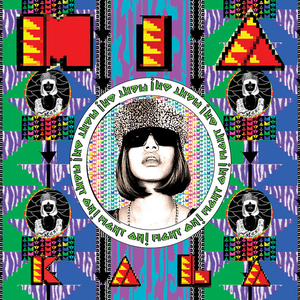
M.I.A.’s Kala: A Sonic Revolution
Jack Doczy
Music Journalist
Back in 2007, M.I.A. dropped her second album, Kala, and it shot her to international stardom almost overnight. The album’s eclectic mix of global sounds and unapologetically political lyrics made M.I.A. a standout figure in the music world. Even now, more than a decade later, Kala still feels groundbreaking. It tackled themes like immigration, cultural identity and global struggles in ways that most mainstream artists hadn’t even attempted.
The creation of Kala was unconventional. After being denied entry to the U.S. on the grounds that she matched the profile of a terrorist, M.I.A. embarked on a journey that took her to Australia, India, Jamaica and Trinidad. This trip deeply influenced the album, infusing it with diverse musical styles and perspectives. M.I.A. leveraged this experience to subvert musical and cultural tropes, creating an album that embraced intersectionality and rebellion.
In the mid-2000s, mainstream protest music often came from white, male artists and was typically aimed at easy political targets. M.I.A. broke this mold by offering a fresh perspective that included the voices of those most affected by global policies. Her hit single “Paper Planes” became a global anthem instantly, with its iconic gunshots and cash register sounds metaphorically representing the harsh realities faced by many immigrants. M.I.A. explained to The Daily Beast in 2009, “I’ve been shot at so I’m quite comfortable with gunshot sounds. If you have a problem with it, go and talk to the people who were shooting at me.”
Kala presented a different side of the hustler’s mentality from what was prevalent in mainstream hip-hop at the time. Songs like “Hussel” addressed the struggles of those working far from home to support their families. In the song, Afrikan Boy’s verse vividly depicts the fear of deportation immigrants face, offering a gut-wrenching perspective that was rare in music. This theme of hustling and survival runs through the album, resonating with marginalized listeners worldwide.
One of the album’s strengths is its ability to incorporate diverse voices. On “Mango Pickle Down River”, M.I.A. collaborates with the Wilcannia Mob, a group of Indigenous Australian pre-teens, showcasing their unique perspective. This collaboration is not only endearing but significant, as it provides a platform for voices rarely heard in mainstream music. “The Turn” and “20 Dollar” further explore global issues, addressing the value of money and the impact of war on youth, respectively. These tracks highlight M.I.A.’s ability to speak from multiple perspectives without positioning herself as a savior.
M.I.A.’s production on Kala is as revolutionary as her lyrics. She co-produced much of the album, working with Diplo and Switch, to create a sound that blends regional instrumentation with rap and electronic music. This fusion resulted in tracks that felt vibrant and authentic. For instance, “Jimmy” repurposes a Bollywood classic with modern beats, while “XR2” is a frenetic rave track. The didgeridoo bass on “Mango Pickle Down River” and the heavily-synthed reinterpretation of the Pixies’ “Where is My Mind?” only further display M.I.A.’s unique and innovative approach to music.
Released at a time when diversity and representation were more important than ever, Kala stands out as a potent reminder of the power of music to question the status quo, inspire change and raise awareness. M.I.A.’s unapologetically creative and innovative sound continues to resonate today, making Kala an album that not only defined its era but also transcends it.
Similar posts


-

1
Last Escape
-

2
In My Head
-
play_arrow
In My Head Phantogram & Whethan
-
-

3
Rabbit season
-

4
Reason to Pray
-

5
Still Do




Post comments (0)