

Inside The Mind of Matt Abajian
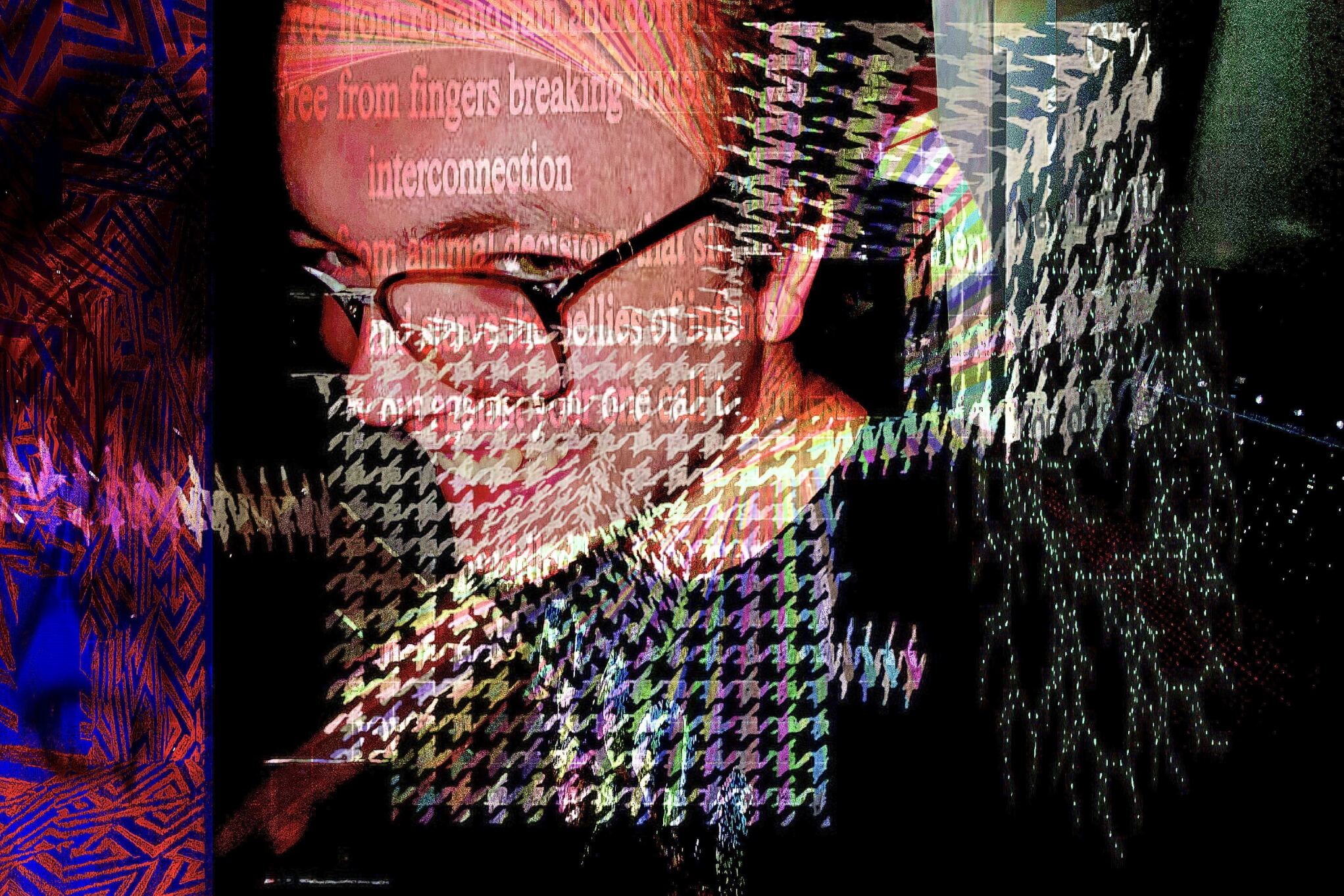
By Abby McCabe
Local Music Journalist
The most fulfilling aspect of my work as a journalist is the exploratory nature of talking to different artists. I am filled with joy when presented with the chance to expand my mental Library of Alexandria—filled with tidbits of knowledge, art, and media uncovered by conventional or unconventional encounters with other explorers ready to divulge their findings to strange passersby such as myself.
Meeting Matt Abajian felt akin to encountering a (friendly) mad sorcerer. Exceptionally intelligent and fervent about his craft, I experienced an urgency to learn all I could about his perspectives and methodologies.
A chance discovery turned multifaceted obsession, I found Matt’s Austerity Gospel tucked inside a bundle of randomized albums I had been tasked with reviewing. I sifted through buckets of bedroom pop and indie rock anthems until the first few notes of ”Prelude (Comb Your Hair)” trickled in through my headphones, disturbing my comfort and sending me spiraling into a fit of curious paranoia.
It begged me to ask the question,
<<WHO IS Matt Abajian?>>
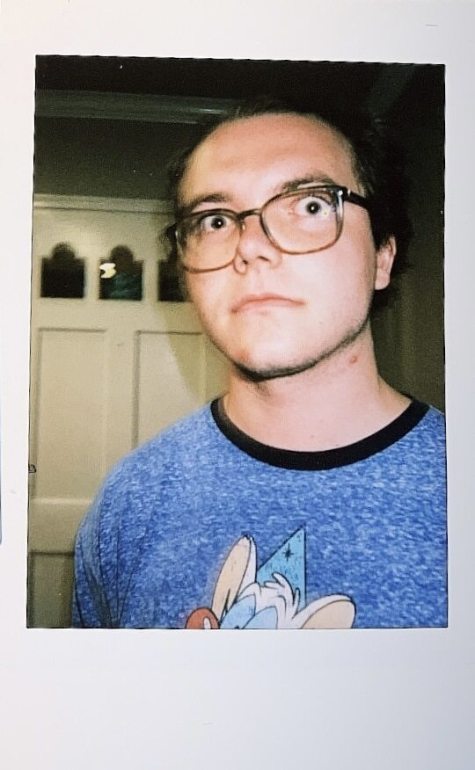
For starters, Matt is a brilliant experimental composer, multi-layered musician, student, educator, and visionary based out of Austin, Texas, who spends his free time immersing himself in the arts and debating the topic of true bugs versus other bugs — Yes, it’s a real thing.

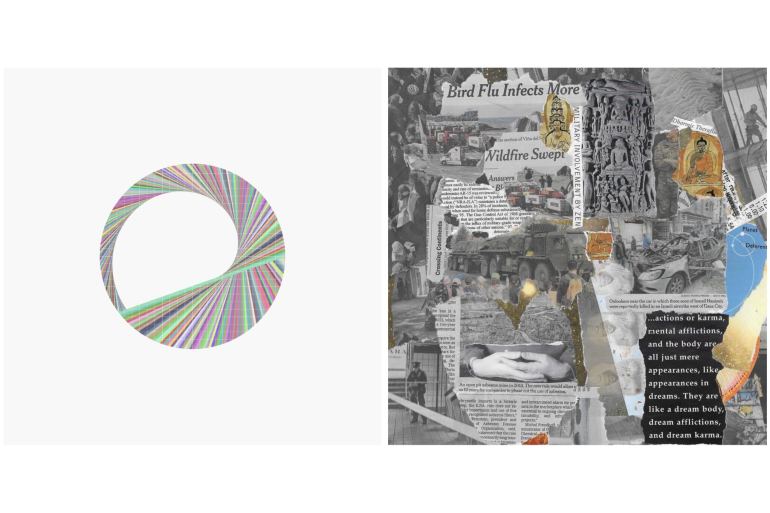
Currently, he has two solo albums: Austerity Gospel, which reflects a three-year journey exploring production techniques and sound creation within the program Max MSP, and Dry Riverbeds, a collaborative experimental record that showcases poetry from his childhood friend and religious scholar, Tom Jennings.
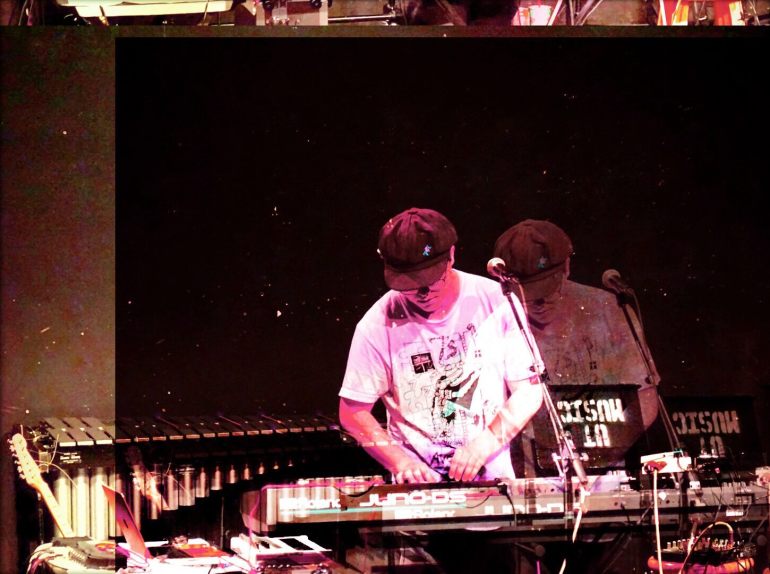
Matt is also part of the Austin-based electronic neo-folk band, Hover, and has been since high school. In this group he sings, plays guitar, and leads production.

Throughout my conversation with Matt, I couldn’t help but feel enamored. Not just by his art, but by his dedication to knowledge. Whether he’s learning a new program or working in a DAW that is unfamiliar to him, Matt finds passion in understanding all that is unknown. He’s an artist hungry for opportunity and a name you won’t want to forget.

How did you get into music production? Was it self-taught, or something that was taught to you?
It’s kind of both, because I started making recordings when I was 15, and I’ve been working in Logic for almost 10 years and figuring it out, you know? You never really know what you’re doing with those things, so it’s just kind of a process of learning it more and more all the time. I have taken classes at Butler for this stuff, but by the time I was getting into those classes, I’d already kind of figured out how it works. Not to be super arrogant about it. Eventually, you start to realize that almost everything is doing a variation of the same process on a piece of audio, and that a lot of things are just dressed up with user interfaces that actually make them seem more complicated than they are, and it’s a whole curve.
What about emulation?
I just think a lot of the things I’m interested in, a lot of the things I listen to use those techniques, and so I’m just trying to find ways to get something that sounds similar, right? I’m mostly self-taught when it comes to this stuff. I do just kind of get into programs that I have and try to get them to do what I’m thinking of from listening to, like, a Steve Reich piece from the ’60s or whatever it may be. It’s my favorite thing to do. I love to just sit there and do that stuff. You’ve really gotta be a nerd to love it.
Is there anything specific that’s inspired your work? Or anything that’s directly influenced you?
It varies between the different projects because, like, Austerity Gospel comes from a really different place than the Hover songs, right? And so, Austerity Gospel, I would say, was more experimental and less stylistically derived from existing material. It was more about working in the different programs I was using and just working on an idea until it became something, as opposed to trying to be in a genre or anything like that. Of course, having gone through a classical music education, I was definitely exposed to a lot of Musique concrète and tape music, and I think that was a big influence on Austerity Gospel. Like Stockhausen, early tape experiment stuff, all the stuff that was coming out of the BBC Radiophonic Workshop.
What was it like collaborating with Tom Jennings on Dry Riverbeds?
He had written his poetry, and we wanted to try and make an experimental record out of it. His process for his spoken word poetry is that he’ll write something and then kind of improvise off of it. I just recorded like two hours of him doing that, and that was the source audio. Then I took a year, a year and a half or so, just kind of working on different processing techniques and different ways to fill out a soundscape with the voice. I kind of cheated a little bit, sometimes there were other instruments and things. The original idea was for it to just be voice, and eventually, I was like this is getting boring, so we needed to have something else going on.
Who are some artists that opened doors for you?
Ooo… There are many. I mean, still probably the biggest one for me is Animal Collective. I think they will forever hold the top spot in my heart. I think that their musical project has been one of the most interesting contemporary music projects that’s ever happened. I remember listening to Strawberry Jam when I was in high school, and it changed my life for sure. They’ve always had an experimental kind of ethos, but the first record they produced was something they made in their apartment, and it’s just this weird mixture of Mark Bolan Tyranasouras Rex stuff with futuristic, digital music and storytelling… like fairytale stuff, but then they pivoted into being a psychedelic folk band for a while. They go in all these different directions, but it’s always kind of held down by the lyricism and melodic sensibility.
Have your professors influenced the way you think about classical music?
For sure. It’s interesting because neither of the people that I studied with really directly understand popular music very much. There is always a little bit of a communication barrier in terms of, I couldn’t bring in an Animal Collective song and be like, listen to the texturing. They don’t listen to music that way. But that being said, I came to understand so much not just about the construction and craft of composing music, but also the dramaturgy and the theatrics of it. Understanding that you really are presenting something that’s narrative, whether you think it is or not, and people are going to process it that way. So, how do you lean into that to make something that’s consistently engaging? And then on a simpler level, just getting exposed to all of the repertoire, especially the 20th – 21st-century repertoire, they’ll turn you on to because you know, nobody’s going around listening to like, Ligeti and being like hey you should go listen to this. But that music is so rich and so rewarding to study.
Your album is titled Austerity Gospel. Was the religious theming intentional?
That theming is definitely there, and it’s by no means anti-religious. A lot of the work I’ve been doing, I’m trying to point towards this broader theme of how do I phrase it… This cultural phenomenon that I think has been going on in America for a long time, where religion is kind of hijacked by political projects and completely usurped by them. And how, like, Christianity in a popular sense, a lot of the time, winds up being this weird kind of marketing element of conservatism in America. I was finishing this record around the election, so I was thinking about this a lot, you know?
I would love to hear more about the meaning behind the song titles on Austerity Gospel.
Oh yeah. “Prelude (Comb Your Hair)” is literally a pun because it uses a bunch of comb filters. I wrote that when I was living at my professor’s house over the summer, which is a long story. I had set up my whole studio in his house, and I would just write stuff for days at a time. That’s when I first started learning Max MSP, so Comb Your Hair was one of the first experiments I did with that, just running my piano through a bunch of weird comb filters. I remember being very disheveled and quickly typing in my computer “Comb your hair, Mr. Piano person” as if almost a dig at myself.
“Concert Footage”, this one’s a little funny because I think I made that track right after I had seen Black Dice, and they had put on the best show I’d ever seen. I called it that because I was working on the track and remembering that show, and visualizing it, as if I were rewatching it.
“Austerity Gospel”, we already kind of talked about. I use those specific terms because austerity is a term that gets thrown around a lot in American politics as it relates to the strategy of conservative politicians, and how it turns into this thing they preach, “Well, we don’t actually need to help anyone.”
“Couch Surfin’ U.S.A.” comes from when I was couch surfin’ in the U.S.A. That one’s kind of built around a banjo improv that I did in my friend’s closet. They were all out of town, so I stole his banjo and recorded it.
“Hypereal”, I was reading a lot of Baudrillard. I was thinking a lot about the idea of hyper reality, simulacra, and all that good stuff.
“Breather”is a little self-explanatory. It’s literally about doing breathwork meditation, and that’s why it makes you be patient. You listen to the same thing for quite a while until it opens up into something colorful.
“Moving Parts” actually is stolen from an old Hover song that we don’t play anymore. It’s kind of a reference for me and no one else.
“Panic (Helps You Realize)” is quite literally about my experiences of dissociative panic and how that feels to me when it’s going on. Just having gone through those episodes, all you can do is ride them out, right? And so, you end up in these terrible headspaces where you know you can’t really do anything about it.
“Headphones” was about me mixing on my headphones while my girlfriend was in the room, and me feeling like an a**hole for ignoring her.
“Tettigarctidae” is a word for a family of bugs that are… let me think of how to phrase this… So, there are true bugs, and there are other bugs. Cicadas are true bugs. I’ve always had a fascination with cicadas because I grew up in Houston, and that was the sound I associated with my environment. “Tettigarctidae” is actually just a long form, heavily processed remix of a piece of electronic music I wrote a few years ago titled “True Bugs.”

What’s it like writing lyrics for Hover?
It’s very spontaneous. Most of the songs start with the lyrics before the actual music. I will get a couple of lines that pop up into my head, and think, where is that going? But it really is a game of waiting for something to show up that I think is worth talking about. A lot of my music is trying to talk mostly about the experience of living as opposed to smaller things, and kind of filtering that perspective through different lenses. I think a lot of the time, I end up writing about awareness of your own consciousness and how you process that.
Are there any solo projects or Hover releases to look forward to anytime soon?
To be honest with you, I haven’t been thinking about recordings very much because I’ve been trying to get my real life going with school and all that, which is kind of lame, but I do have stuff that will be coming out. I mean, there’s a Hover record that still needs to come out, and it still will. It’s taking its sweet time, but it eventually will get here. We’ve got like 43 songs, so I’ve got enough material for four albums, and I’m gonna keep writing them. I also have some material I’d like to follow Austerity Gospel up with, but I haven’t gotten in the studio with it yet. So, you know, yes. The short answer is yes. The long answer is I’m not sure when.
Similar posts

-

1
In My Head
-
play_arrow
In My Head Phantogram & Whethan
-
-

2
Last Escape
-

3
Reason to Pray
-

4
Rabbit season
-

5
Still Do

Post comments (0)