

Introduction to Musica Mexicana
Efrain Torres
Music Journalist
Musica Mexicana has steadily exploded onto the global music scene in the 2020’s after decades of being heavily ignored by the latin music scene despite years of having a latin strong presence. With that, will explore Musica Mexicana’s biggest music genres.
Corridos
Corridos first gained popularity in the early 1910’s during the Mexican revolution as a way to empower the working classes fight against oppression caused by the government. The genre has greatly evolved over 100 years later serving as ballads of love, everyday life, crime, social problems, always serving as a means to empower listeners. This genre of Mexican Music recently exploded on the global music scene thanks to artists Peso Pluma, Natanael Cano, Junior H, Fuerza regida, and many more with the Corridos subgenre, Corridos Tumbados. The corrido genre has evolved with subgenres such as Corridos tumbados, Corridos belicos, etc.
Since the genre first derived from the Norteña genre as a narrative form rather than a genre itself, the instrumentation initially employed anything from Mariachi, Norteño, and Banda Sinaloense. In more modern times, many artists have employed a requinto, 6-string-guitar, tololoche, or electric bass depending on the sub-genre of corrido, but it varies depending on how an artist’s sees fit.
Norteñas
Norteño music developed late in the nineteenth century in the Northern States of Mexico as a mix of the local instruments and the folk music of German, Polish, and Czech migrant workers who immigrated to Mexico. This genre can employ a few different instruments, but its traditional mainstays are the accordion and bajo sexto guitar. Being that this genre originates from northern Mexico, artists typically wear the cowboy boots and hat when performing this genre. Being that this genre has roots in the European Polka dancing, Norteña’s are often danced in many Mexican party gatherings along the northern Mexican states and in U.S. Mexican communities.
A sub-genre of Norteño is the Conjunto Norteña that adds bass instrument and snare drum to the accordion and bajo sexto pair. This subgenre first gained traction within the Mexican American border communities on the borders in the 1940’s but eventually expanded with other Mexican Norteña bands using the same instrumentation.
Sierreno
A variant of Norteño Music that also developed in the northern states of Mexico. The sierreno sound was greatly popularized by the late Arial Camacho in the mid 2010’s who would later inspire the sad sierreno sensations Junior H and Ivan Cornejo. Most famously, Sierreno regularly uses the requinto (12-string guitar), 6string guitar, tuba, and accordion. Although those have usually been the core instruments, different artists add the tololoche or electric bass.
Banda Sinaloense
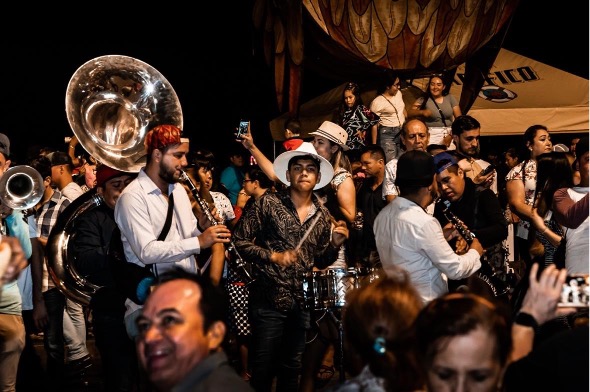
One of the most popular genres coming from Mexico is Banda Sinaloense that derived in the Northwestern State of Sinaloa. The genre began to take form thanks to German migrants who arrived in Mazatlán, Sinaloa in the 19th century who brought their wood instruments along with them. Local musicians then began to mix European sounds with indigenous sounds, eventually evolving into the distinct Banda sound listeners have become accustomed too.
The band usually consists of a 16-person ensemble of wind and brass instruments. Originally, Banda Sinaloense only used instrumentals for decades until all-timer Banda El Recodo added vocalists, helping popularize the genre all across Mexico. Mexican Bandas Artists can usually be recognized by their matching flashy suit and huge ensemble Banda.
Duranguense
This genre originated in Chicago, Illinois, but its roots come from the Mexican State of Durango. The genre first blew in Chicago thanks to the community of Mexican migrant around the city. The genre later gained popularity with Mexican Americans, then later spread all across Mexico.
This style of music can be a hybrid in that it gained traction throughout the 2000’s, so it employs brass instruments, a techno Banda, and tamborazo inspired by both Mexican and U.S. music scene. The genre gained a huge traction especially from its dance that comes along with the genre called “El Pasito Durangese”.
Mexican Hip-Hop & Rap
Mexico has a well-developed Hip-hop and rap scene with heavy influences from the early 80’s and 90’s rap scene. Artists from this scene typically rap about everyday life and social struggles. Although as of late though, rap artist Victor Mendivil has begun to modernize the genre with new themes similar to that of Corridos tumbados.
Similar posts


-

1
In My Head
-
play_arrow
In My Head Phantogram & Whethan
-
-

2
Last Escape
-

3
Reason to Pray
-

4
Rabbit season
-

5
Still Do


Post comments (0)