

Fostering A Community Within Electronic Music: A Conversation with Thysbe

Carter Guthrie
Music Journalist
The electronic music scene in 2026 is more popular than ever, with deep roots that have been dug all across the planet. From techno in Detroit and London, to Brazilian Funk in São Paulo, it is safe to say the whole world is pumping up the volume. The various genres and subcultures allow for a diverse array of communities for anyone to call home. I got the chance to talk to Thysbe, who was my brother’s best man, and just so happens to put on electronic music shows based in Chicago.
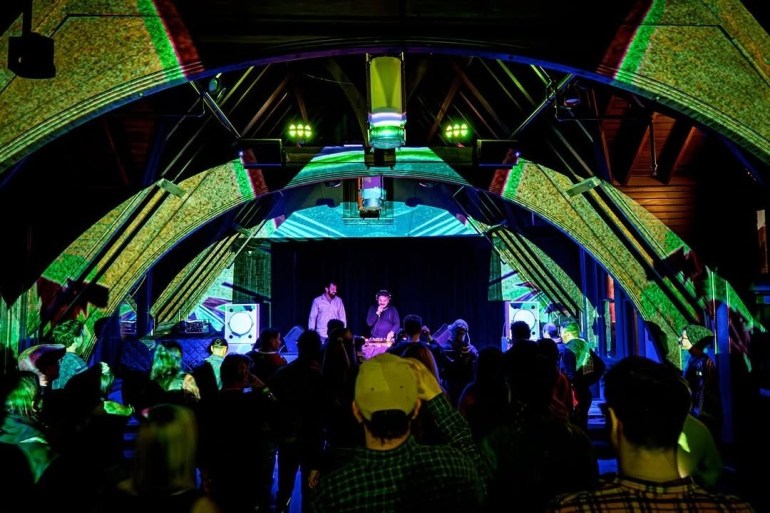
We began the conversation by talking about his roots. Southwestern Wisconsin is where Thysbe’s roots are, and it is where he organized his first music festival.
Carter: Why did you move to Chicago after having such strong roots in Wisconsin?
Thysbe: A big part of really any music scene is going to be nightlife. It’s going to be loud music in a bar or party setting, but it’s more about the community behind it and the spirits of people you’ll meet. If you exist in a music scene, you know that you’re going to meet people who have very similar, niche interests. I would be surprised if any random person on the street knew the artists I am interested in, so it is nice as a listener to have that easy access to these smaller communities. It is easier here to talk about music, connect with people through music, and play music, but it really all comes down to the people. In these circles, you’re never really alone. I feel alone in a crowd all the time, but the deeper you are in a scene and the larger your web is, you can expect to see these 5-10 people show up and participate.
Carter: What are the levels of “the scene”?
Thysbe: I think it’s more of a gradient. To understand EDM, which is really a term popularized by music labels to package and sell music, you need to understand the various roots. Originally, there were a ton of EDM birthplaces. You have Chicago house, Detroit techno, and when talking about EDM, within these cities were many disaffected, minority groups who were the catalyst for the scene. These original sounds from Jamaica, Africa, places like that, have been repackaged countless times, so it’s important to point out the roots.
Carter: What is your place within the scene and the industry at large?
Thysbe: I would say I’m pretty much a step above the bottom rung, like a guy making music in his bedroom for some followers for sure.
Carter: It seems like a pretty interesting spot to be in. Do you feel like you’re maybe at the forefront of something that will blow up or something that will stay local?
Thysbe: I don’t know about boundary pushing, but I feel like the events in Chicago, especially the ones I do with Lake Effect Records, come back to creating an environment for the community. With these shows, we are taking a sound system and playing underneath overpasses and bridges — just playing music for free. We play near public transit hubs so that people can take the bus out, we cater everything ourselves, and it’s just very much grassroots community organizing for anyone to enjoy.
Carter: How does this compare to your work outside of Chicago?
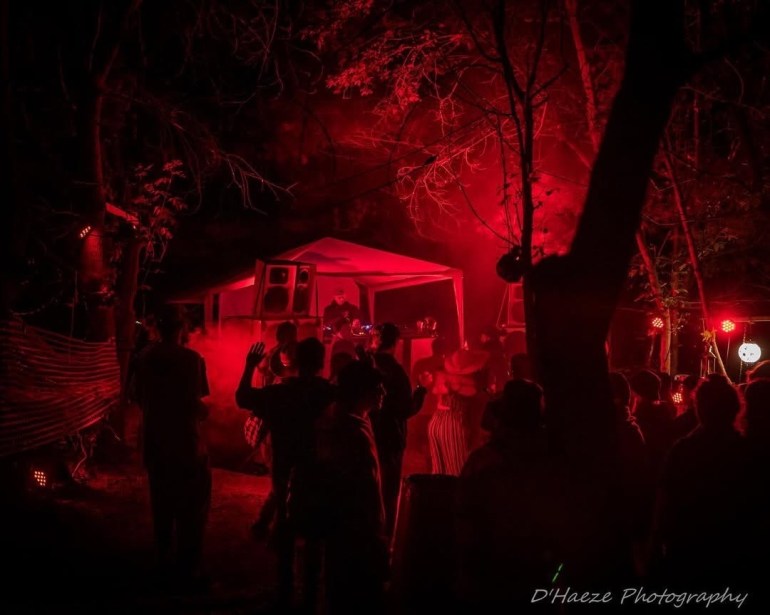
Thysbe: The original gig was called Driftmore, which was another very scrappy, low-budget music festival. We ran it for 7 years (excluding 2020), starting in 2017, where our biggest year we probably had 400 attendees, so nothing too big, but something so fun where we did some really cool work. It was in a small town called Platteville, Wisconsin. We were outside of the city limits on private land where we had people from all over come out, had a few sound systems set up, and played music.
Carter: Were the people going to Driftmore the same people that you’ll see at other shows?
Thysbe: Yeah, the community aspect was definitely strong where I was managing the stage, booking the artists and grounds, that type of stuff. But as a whole, our team comprised around 20 people who volunteered to help out and make this big party in the woods happen.
Carter: What role do sound systems play within the community?
Thysbe: I would say that even if someone does not have the vocabulary to describe a bad sound, you can still hear it. You may not be able to pinpoint where the problem is, but it’ll still be there. Electronic music is kind of created with the sound system in mind, so I don’t think you can underscore the importance of it. It’s not really a new emphasis that has been put on it either. Back in the 60s and 70s, King Tubby in Jamaica was creating dub versions of reggae music and making the bass lines the main focus. The thing is, back in the day, you couldn’t go out and buy a JBL sound system or order a nice subwoofer online. It was very much a labor of love by these people to build sound systems specifically for this bass-forward music. It’s evolved over the years, but also stayed the same in communities. For example, I had the pleasure of participating in a sound system build with Lake Effect, and now our crew has it to bring to shows to always have good sound.
Carter: What do you think of the DJ’s and EDM artists headlining giant music festivals for these massive crowds?
Thysbe: There are definitely some, I would say, that are hurting the culture, and there is an argument to be made. I feel like dance music culture and drug culture are going to be intertwined, and that can get a little uncomfortable. But that being said, I at least strive to be an anti-gatekeeper. I think, you know, if John Summit brings 100 people into the scene at large, or gets them interested in music, five of those people might then go on and learn about the history and how deep the scene’s roots go.
Thysbe’s grounded approach to electronic music was extremely refreshing. In an era where there is so much noise and a need for a reset from being overwhelmed, it seems like Thysbe’s community-driven approach is a good place to start when needing something that you can count on. Listen to Thysbe’s new record here: https://thysbe.bandcamp.com/album/amok.
Similar posts


-

1
Last Escape
-

2
In My Head
-
play_arrow
In My Head Phantogram & Whethan
-
-

3
Reason to Pray
-

4
Rabbit season
-

5
Still Do


Post comments (0)