

How Music Became My Soundtrack for Grief

Dale Blasingame
Associate Professor of Practice – School of Journalism & Mass Communication
My mom died five years ago this week – and dad followed a few months later. As the globe shut down because of COVID, my entire world collapsed like a black hole in outer space.
I was a bit of a surprise as a baby – born to late-in-life parents who already had three kids in high school or junior high. My first 43 years existed under the assumption I was only put on this earth to bring joy to my mom and dad and protect them.
So what’s a person supposed to do when their sole purpose of living is suddenly gone?
Grief affects everyone differently, but the one constant is no one or thing can ever help prepare for such a monumental loss. Therapy and medication got me through that first year without my parents – the emotional hurricanes, days of not getting out of bed and the overwhelming gut feeling of utter hopelessness.
Looking back, I’m amazed I was able to regularly make it to the classroom – in person or on Zoom – during this stretch. However, even on days where I had to apologize for not turning on my Zoom camera, I continued a tradition of playing music before class began. Music not only broke the uncomfortable silence but was a source of camaraderie with students, prompting many a conversation about playlists and band recommendations. A little more than a year after my parents died, one of my former students, Autumn McGowan, reached out to check on me and offer some advice. She said I should listen to a band called Japanese Breakfast. The lead singer, Michelle Zauner, wrote her first two albums and a book about the death of her mom. Autumn thought I would connect with Zauner’s experience and lyrics – and even offered to go see her in concert with me that week.

A few days later, the two of us went to Mohawk in downtown Austin to catch one of Japanese Breakfast’s performances during SXSW. It was a rare evening where I was excited to leave the house – and even rarer that my grief didn’t cause me to back out.
Something transcendental happened that night as Autumn and I sat on the third level of Mohawk’s outdoor stage. While Zauner performed in a floor-length yellow dress, surrounded by her band in suits and bolo ties, her message punched a hole through my chest. Even though we could hardly be more different, we had something very raw in common – immense and life-shattering loss.
Before we left, I asked Autumn if she would go with me to watch Zauner perform again the following afternoon at a different SXSW event. Then began the deconstruction of song lyrics, such as “The Body is a Blade.” Its close became a tool for my worst days.
“The body is a blade that moves while your brain is writhing
Knuckled under pain, you mourn but your blood is flowing”
I often repeated those lyrics under my breath – reminding myself to stand up, shower, brush my teeth, eat – until normally simple tasks felt somewhat doable.
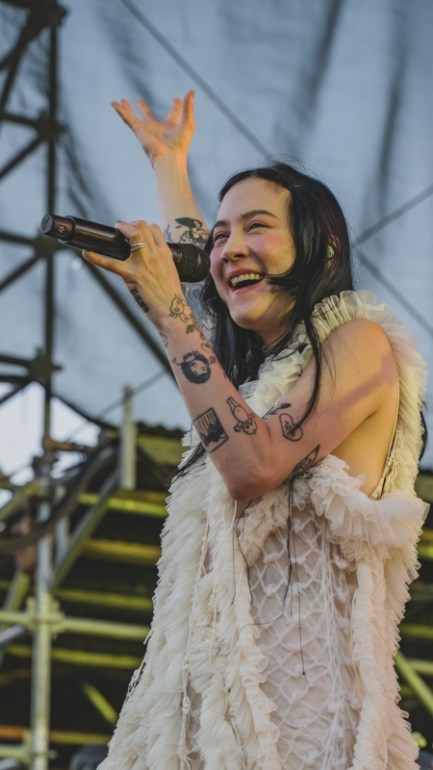
During this time, Zauner burst onto the scene professionally. Her book, Crying in H Mart, became a New York Times bestseller for 67 weeks. Her band received a Grammy nomination for Best New Artist and hit the road for a world tour around their latest album, Jubilee. She’s since described Jubilee as the third part of her trilogy of albums around grief, giving herself permission to feel joy again. Inadvertently, it did the same for me. I ended up seeing 16 shows of the tour, using the band’s schedule to rekindle my passion for travel.
Zauner took 2024 off to live in South Korea and work on her second book. She returned in early 2025 with a new album, For Melancholy Brunettes (and sad women), and another world tour. For an album based around melancholy, you’d never know it from watching her perform live. Zauner stomps, sways and spins around with a consistent smile on her face these days, even during songs she wrote about her mother’s death.
I hit the road to follow the band again, as well, catching 10 of their concerts this year – about a third of the US tour – and even got to tell Zauner thanks for the role she unknowingly played in my life. From Bend, Oregon to Toronto and final stops in Houston and Austin, I made a concerted effort to talk to people before and after shows – curious to learn what drew them to Zauner and her music. In something that can’t be mere coincidence, it wasn’t hard to find someone every night with a similar story to my own. Sometimes we’d cry together. More often than not, we’d proclaim how much it meant to realize we weren’t alone during the darkest times of our lives.
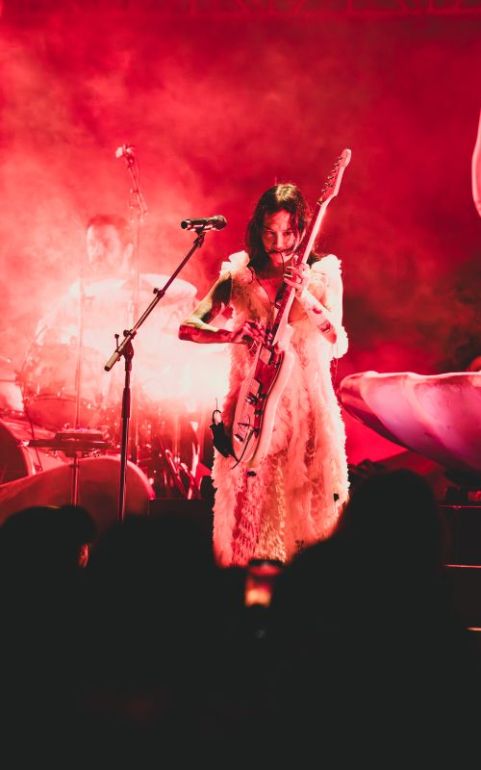
What originally began as a connection through grief transformed into a network of healing and appreciation.
Just this past weekend, on the last night of this latest tour, I met a young woman from west Texas. We both stood waiting for Zauner at the stage railing an hour before the start of the set, securing our place front and center (as one does for their favorite bands at the ACL Music Festival). I told her I was happy she got a spot on the rail, since she couldn’t have been taller than 5’1” or so. She then asked if I had seen Japanese Breakfast before, which opened the door for my now-familiar conversation with strangers. As with so many others I talked to, this person half my age also used Zauner’s music – especially “The Body is a Blade” – to get through a very difficult time in her life. About 40 minutes into the concert, we shot each other a knowing glance and nod of the head when that familiar guitar riff started.
A few songs later, the show – and tour – was over. My rail neighbor thanked me for sharing, and I returned the sentiment. We shook hands, wishing each other well. With a smile, we both agreed to see each other again on the next tour.
Similar posts

-

1
Last Escape
-

2
In My Head
-
play_arrow
In My Head Phantogram & Whethan
-
-

3
Rabbit season
-

4
Reason to Pray
-

5
Still Do




Post comments (0)